

Code that runs beside your Zoho apps, not outside them.
Zoho Catalyst is Zoho's own serverless cloud, with functions, scheduled jobs, a database, file storage, and hosting. It is for the integration or service no configuration can reach, and it talks to Books, CRM, and the rest through Zoho's own APIs, with no third-party server in between.
Try Zoho Catalyst
Open a project and deploy a first function yourself.
Start a free trial →Have us build it
Built and deployed by a Zoho Advanced Partner, and supported after go-live.
Talk to us →What a cloud inside the suite changes.
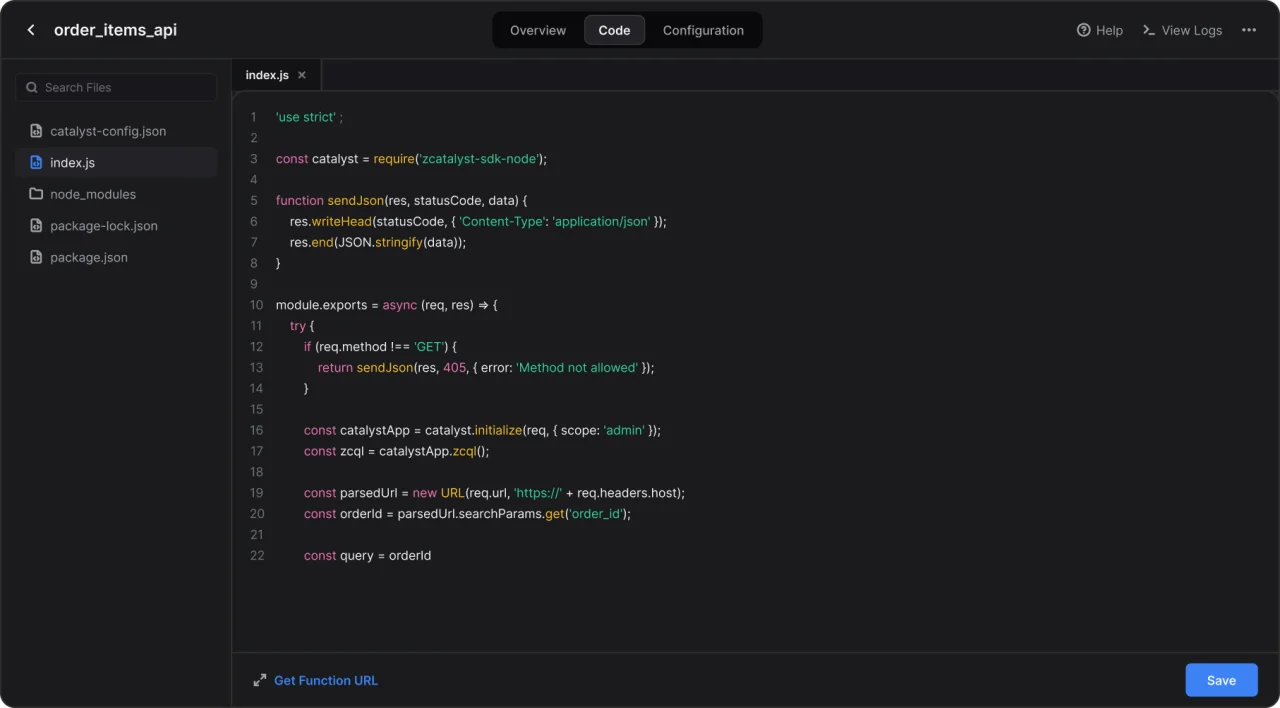
- Serverless functions in Node.js, Python, or Java, called by an application, a webhook, or a schedule.
- Scheduled jobs that run overnight with no server to keep alive.
- A relational Data Store, file storage, and caching beside the code that uses them.
- Front ends hosted on Slate and deployed from Git.
- Logs for every request, so a failed call can be traced to its cause.
- Connections into Zoho's applications, so the code reads and writes the same records your team works in.
From the function to the front end, one cloud.
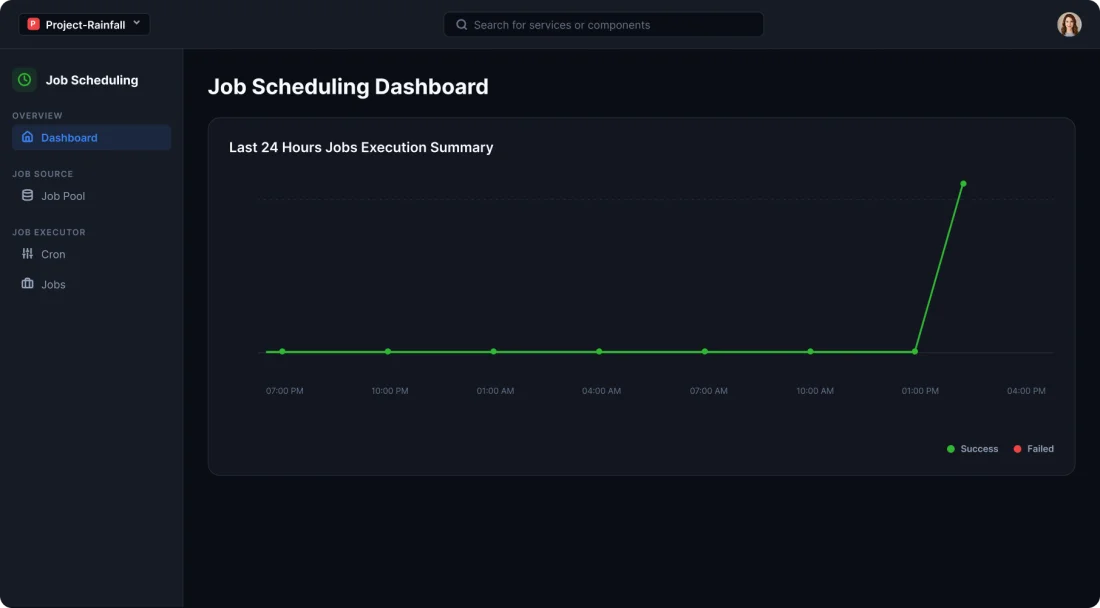
Scheduled jobs
The overnight run, on time, without a server to watch.
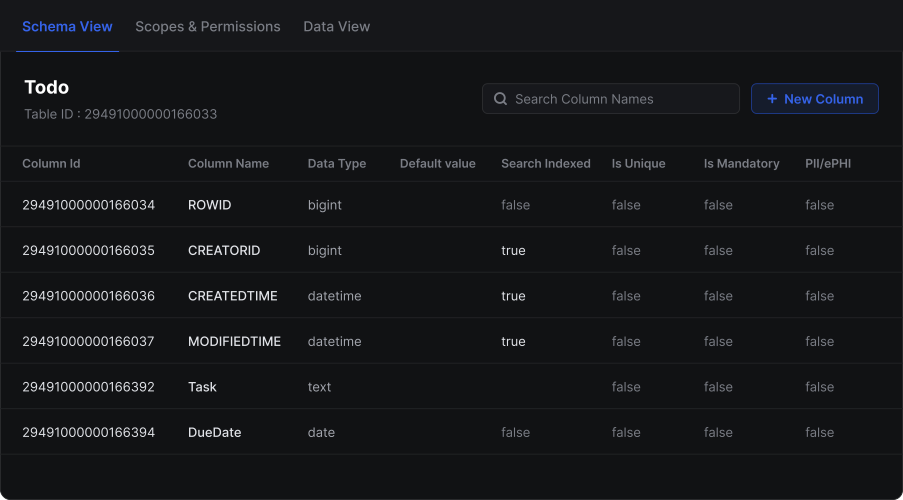
Data Store
A relational database beside the code that needs it.
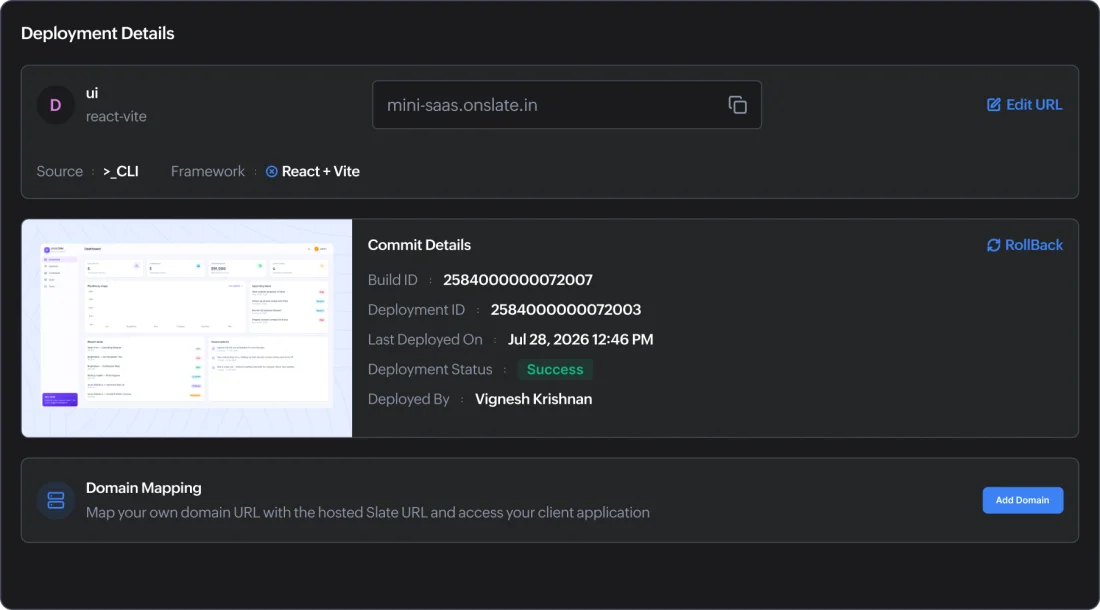
Front-end hosting
Deployed from Git, with every build on record.
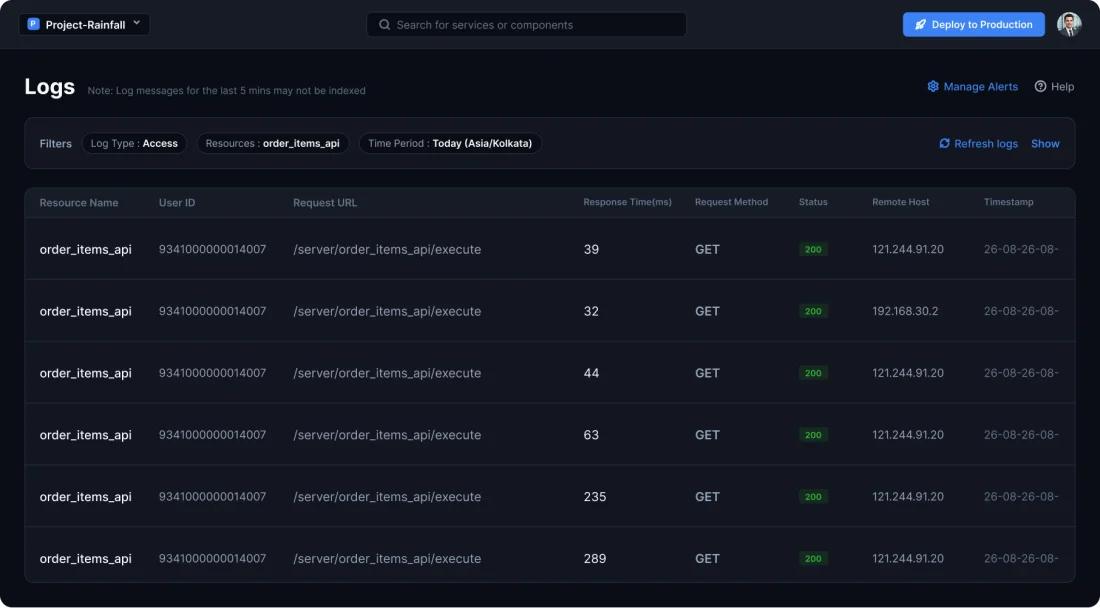
Logs
Every request, its status, and how long it took.
Running on Catalyst today.
An electricity account that reconciles itself
Bills arrive from the utility's file server as itemised supplier bills matched to the sen, and payment confirmations return in the utility's own fixed-width format. Two scheduled functions run it every night.
Read the build →Self-hosted or Zoho CatalystA signing service for the version that requires one
LHDN's signed submission format (an XAdES signature over canonical JSON, carrying three digests), built to run self-hosted or as a Zoho Catalyst function.
Read the build →Priced by use, from free.
Zoho's Malaysian pricing for Catalyst, as published. Catalyst bills for what the code consumes. The cloud is the smaller number. The code that runs on it, and the care that keeps it running, are the part we quote.
Free tier
For the first function, or a service that stays small.
Renews every month, for as long as the account exists.
- More than 70 components within the allowance
- Shared across every project in the account
- 25,000 GB-seconds of functions a month
- 900 GB-minutes of AppSail a month
- No charge unless the allowance is crossed
Pay-as-you-go
For workloads that rise and fall from month to month.
Billed monthly on actual consumption.
- Functions at RM0.000064 a GB-second
- AppSail at RM0.0052 a GB-minute
- A minimum of RM20 a month for each project that crosses the free tier
- Nothing to pay in a month nothing runs
Subscription
For a fixed, predictable bill.
Five tiers, RM40 to RM400 a month.
- RM20 of free-tier use added to every plan
- No per-project minimum
- Add-ons from RM20, one-time or recurring
- Alerts at 50% and 80% of the plan
- Past the plan, calls fail for the rest of the month unless you move up
What a subscription buys
Each figure assumes the whole plan, free-tier credit included, is spent on that one component. Real workloads mix components, and the figures fall accordingly.
| Plan | A month | Functions (GB-seconds) | Data Store rows read or written | File storage operations |
|---|---|---|---|---|
| Catalyst Lite | RM40 | 656,250 | 175,000 | 26.25 million |
| Basic | RM100 | 1.875 million | 500,000 | 75 million |
| Standard | RM200 | 3.475 million | 900,000 | 137.5 million |
| Premium | RM300 | 5 million | 1.3 million | 200 million |
| Elite | RM400 | 6.5625 million | 1.75 million | 262.5 million |
Zoho's published prices for Malaysia, read 20 October 2026; Zoho may revise them. SST is charged on top. New accounts receive RM1,000 of credit for six months once a card is added. Unused credit and plan allowance do not carry into the next month. Development is quoted separately by us.
Where it sits.
Catalyst is for the work Zoho's applications were not designed for: the bank file, the regulator's schema, the overnight exchange with a supplier's server. If configuration can do it, we configure. When it cannot, the code goes on Catalyst.
Zoho Creator is faster when the need is an application people use, with forms, views, and a portal. Catalyst fits when the need is a service that runs unattended. Our custom engineering team builds on both and will tell you which one fits.
The software is the licence. The system is the work.
Zoho builds the platform. We build what your business runs on it — diagnosed, designed, implemented, and supported for as long as you run it. How we work → Ongoing support →
Tell us what needs to run on it.
Describe the integration. We'll tell you whether it belongs on Catalyst or in configuration.